All the customers, including some of the major producers in Iran such as Davardashti, supply their own wool to be dyed and then specify colours and quantities. The variations in colours are vast depending often on the length of time in the vat to get the right shade. They will also specify whether they want 100% vegetable dye or a mix with synthetic dyes to bring the cost down. Unfortunately, as the vegetable dying process takes longer, the raw materials are more difficult to obtain and are more expensive, this means that producers will often cut corners to obtain cheaper dyed wool. In some cases, synthetic dyes are necessary, such as with the use of indigo, as there is not enough natural indigo available and as natural and synthetic indigo are the same chemical compound, the end result is indistinguishable.
Mordants are used in the dying process as a ‘metal’ that binds to the wool and then binds the dye to the wool. If not done, the dyes will run out in the first wash.
Some of the natural raw materials used include madder root for red, however, as I mentioned above, it is often mixed with synthetic red to bring the cost down. Cochineal is used for burgundy reds. Wild dill is used for light yellow. Pomegranate skins and oak acorn skins are also used. The warehouse had sacks upon sacks of these natural raw materials. More photos of the dye plant can be found here.
I was particularly interested in finding out more about the washing process. A lot of commercially produced carpets use acids and alkaline solutions to soften the new carpet colours, which is unnecessary if carpets are left in the sun instead. The use of acid or alkaline washes is often called ‘medical’ washes, and is often undertaken in the winter months (when there’s not as much sun available). These washes will give carpets a soft and silky sheen, but will of course reduce the life of the wool. Tea stain, which is another common ‘wash’ effect on carpets to make them look older, lightens in time, but of course over time, carpets acquire a patina of age anyway, hence taking over from the tea wash effect.
It is possible to dye wool before spinning it. However, in most cases, wool is spun then dyed. Wool can be washed before dying to ensure the wool is cleaner, however, often this is skipped in the process. Synthetically dyed wool tends to be cleaner, as vegetable dyes leave a residue in the wool and weavers often complain of the ‘dirtiness’ of the wool. So, not only do producers have to be convinced of the benefits of using vegetable dyes, but often the weavers themselves.
In terms of the quality of wool, the local Fars wool is considered the best quality, followed by wool from the Kurdistan region.
Parham gave me a tip for checking whether wool has been dyed with vegetable or synthetic dyes. Dip a strand of wool in a hydro sulphate solution. If the colour fades quickly it will confirm the use of synthetic dyes.
Here are some photos:
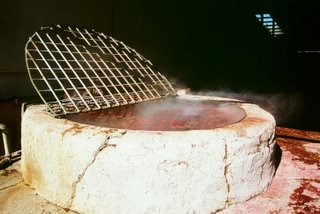
A dye vat - wool being dyed red with madder root
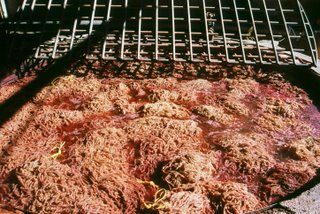
Wool in the dye vat
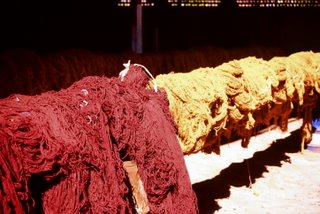
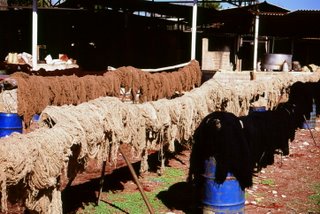
Dyed wool drying in the sun




 Posts
Posts

