Monday, April 24, 2006

The Sayahi Dye Plant near Shiraz

On my last trip to Iran, I called in on Parham Sayahi who is managing one of the largest, if not the largest, dye plants in Iran. His father, Abbas started this a few years ago, and is renown for leading the renaissance in Iran for vegetable dyes. More information on Abbas, Parham and the dye plant is here.

All the customers, including some of the major producers in Iran such as Davardashti, supply their own wool to be dyed and then specify colours and quantities. The variations in colours are vast depending often on the length of time in the vat to get the right shade. They will also specify whether they want 100% vegetable dye or a mix with synthetic dyes to bring the cost down. Unfortunately, as the vegetable dying process takes longer, the raw materials are more difficult to obtain and are more expensive, this means that producers will often cut corners to obtain cheaper dyed wool. In some cases, synthetic dyes are necessary, such as with the use of indigo, as there is not enough natural indigo available and as natural and synthetic indigo are the same chemical compound, the end result is indistinguishable.

Mordants are used in the dying process as a ‘metal’ that binds to the wool and then binds the dye to the wool. If not done, the dyes will run out in the first wash.

Some of the natural raw materials used include madder root for red, however, as I mentioned above, it is often mixed with synthetic red to bring the cost down. Cochineal is used for burgundy reds. Wild dill is used for light yellow. Pomegranate skins and oak acorn skins are also used. The warehouse had sacks upon sacks of these natural raw materials. More photos of the dye plant can be found here.

I was particularly interested in finding out more about the washing process. A lot of commercially produced carpets use acids and alkaline solutions to soften the new carpet colours, which is unnecessary if carpets are left in the sun instead. The use of acid or alkaline washes is often called ‘medical’ washes, and is often undertaken in the winter months (when there’s not as much sun available). These washes will give carpets a soft and silky sheen, but will of course reduce the life of the wool. Tea stain, which is another common ‘wash’ effect on carpets to make them look older, lightens in time, but of course over time, carpets acquire a patina of age anyway, hence taking over from the tea wash effect.

It is possible to dye wool before spinning it. However, in most cases, wool is spun then dyed. Wool can be washed before dying to ensure the wool is cleaner, however, often this is skipped in the process. Synthetically dyed wool tends to be cleaner, as vegetable dyes leave a residue in the wool and weavers often complain of the ‘dirtiness’ of the wool. So, not only do producers have to be convinced of the benefits of using vegetable dyes, but often the weavers themselves.

In terms of the quality of wool, the local Fars wool is considered the best quality, followed by wool from the Kurdistan region.

Parham gave me a tip for checking whether wool has been dyed with vegetable or synthetic dyes. Dip a strand of wool in a hydro sulphate solution. If the colour fades quickly it will confirm the use of synthetic dyes.

Here are some photos:
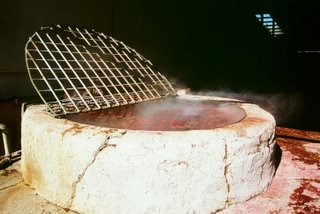
A dye vat - wool being dyed red with madder root
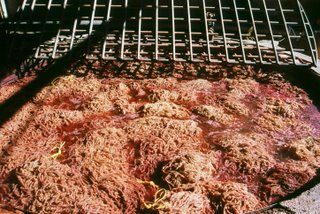
Wool in the dye vat
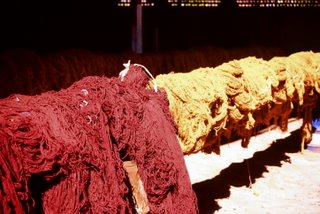
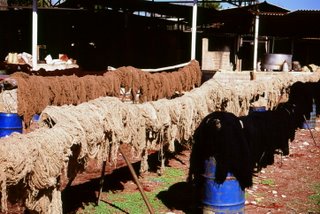
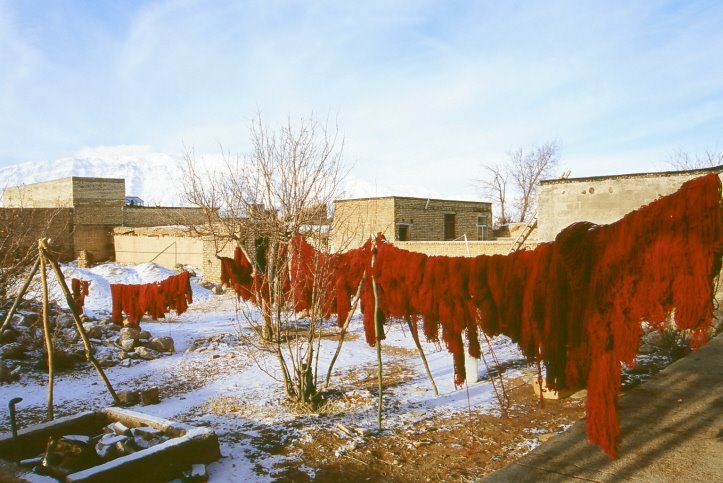
Dyed wool drying in the sun

Saturday, March 18, 2006

Gabbeh weaving in the Chahar Mahal

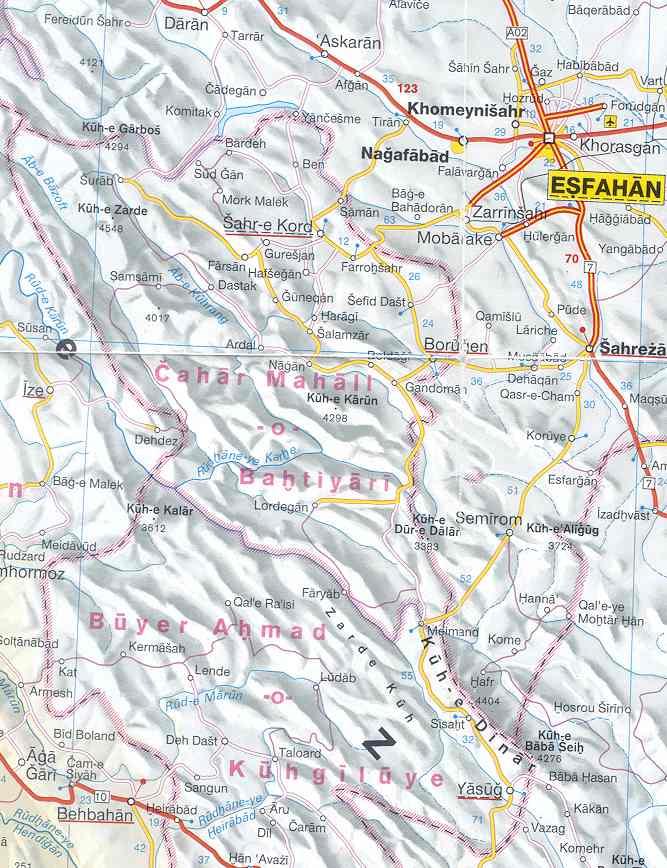
On my last buying trip to Iran I stayed with a Qashqai producer in Borujen, Godarz Hoshmand Emanlou, and went with him to visit some of the 100-odd weavers he has producing gabbeh carpets in the mountain villages in this area. He dyes all the wool himself, using vegetable dyes, which he then provides to the weavers. He also provides them with the designs to weave based on his knowledge of what the market wants. The weavers are paid for the product off the loom. Each week Godarz makes a trip to a dealer in the Tehran bazaar who buys the product and will finish the carpets for sale, i.e. shear the pile and wash the carpet. The weavers are all from Bakhtiari villages, though the gabbehs when they reach the markets in Esfahan, Shiraz or Tehran will probably be known as Qashqai gabbeh weavings.
In fact, there are many falsehoods in the carpet weaving business which makes it extremely difficult to know what you're buying as an end customer. One story retold to me when I passed through one particular village is that locally this village has an excellent reputation for its gabbeh carpets, yet Shirazi dealers fail to believe that this poor mountainous village could possibly deliver such excellent weaving, so they are sold as "Bushehr" gabbeh carpets -"Bushehr" having the reputation in the major carpet centres within Iran as having the best quality.

Here are some photos...
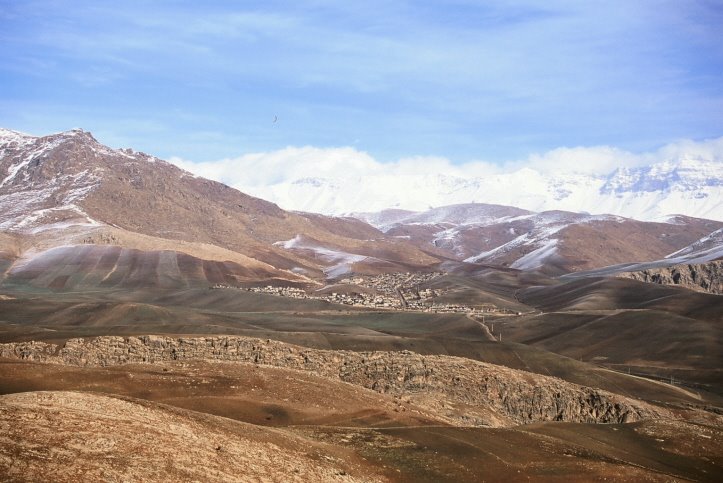
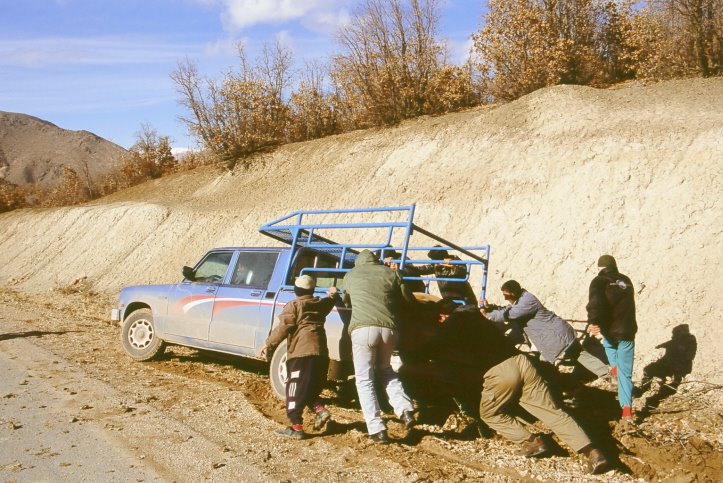
This is a very mountainous region, and visiting in January there was a lot of snow around. The villages are mostly unpaved, which meant wading through lots of mud. We even managed to get our vehicle stuck in the mud when we veered off the tar-sealed road.


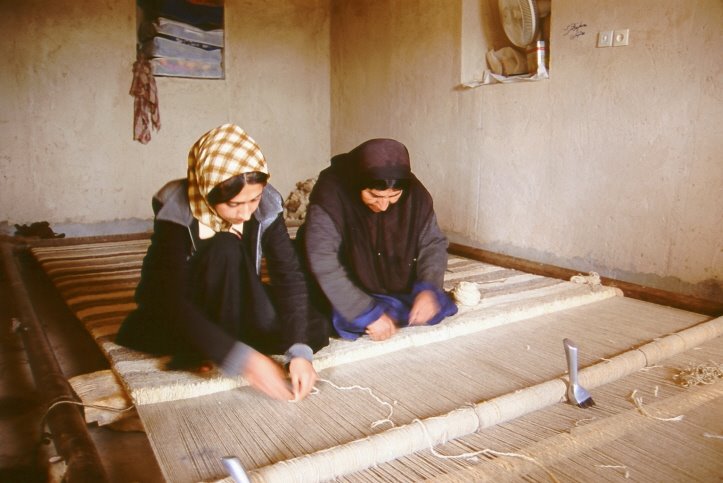
Mother and daughter weaving an undyed striped gabbeh carpet in Sarmour village. The carpet behind them represents 22 days work so far.


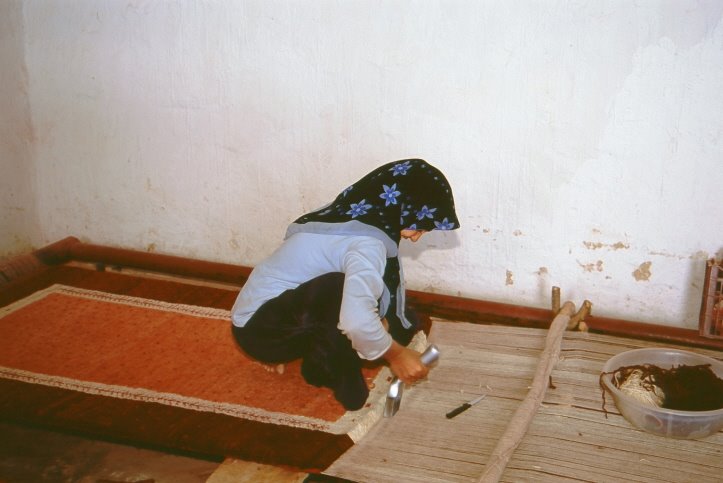
A 16 year old girl doing some of the weaving on a fine quality gabbeh carpet that is mostly the work of her older 24 year old sister.


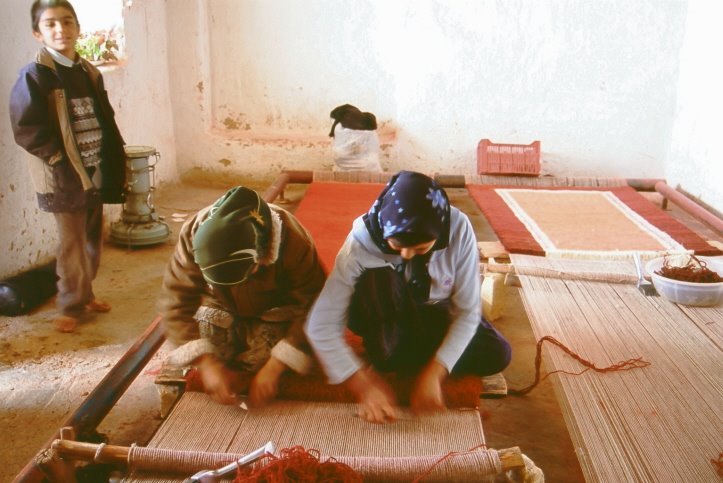
The same girl with her younger 8 year old sister weaving a plain red gabbeh runner size carpet. For these families, the bulk of their income comes from the girl's weaving in this subsistence farming area in the mountains. The reality is the better the weaving skills of the womenfolk, the greater the income they can expect. The older 24 year old sister who has been weaving for 12 years is in much demand by other gabbeh carpet dealers/producers.


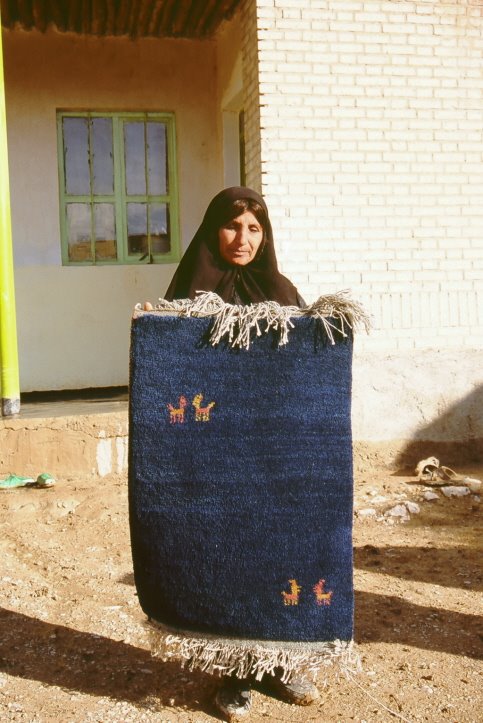
This is one of the finished carpets being paid for. (The weaver was too shy to appear in front of the camera!)


A completed carpet being cut from the loom.


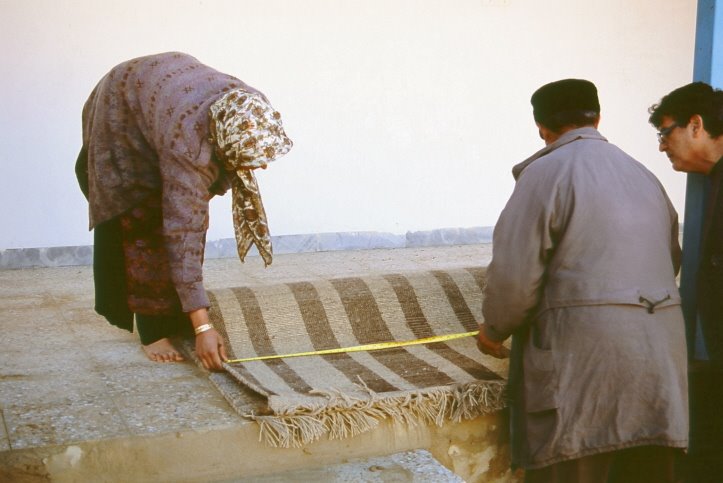
A carpet being measured - payment for the weaver is per square cm.


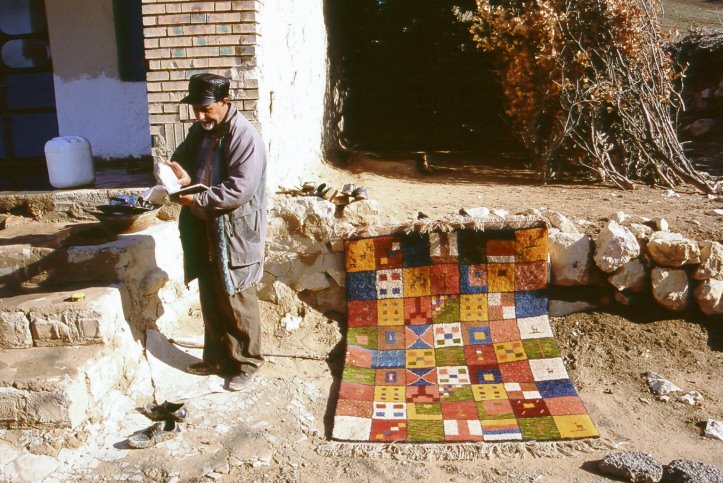
A carpet that was made on spec. by the weaver.


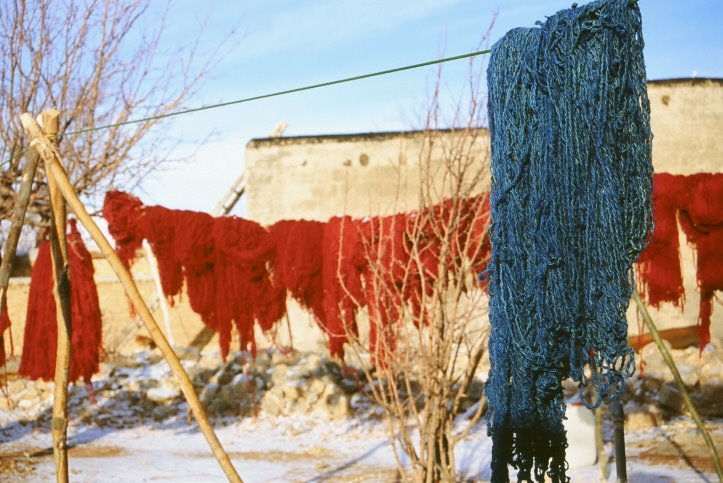
Naturally died wool drying in the sun. The madder root is used for the reds, indigo for the blue. Godarz does the dyeing of all the wool himself, with an assistant, using natural vegetable dyes.

Friday, March 17, 2006

Cleaning carpets

I've just received a rather comprehensive answer regarding a comment about carpet cleaning I had posted on a carpet web usergroup, and thought it's worth sharing...

Me: I don't suppose you can expand on your comment...

"As I'm sure you are well aware, there is a VERY right and VERY wrong way
to treat vegetable dyed fine wool rugs! An incorrect approach could be disastrous!"

Here in the Middle East we vacuum carpets, then wash them every few years when they require it, by lightly scrubbing with a wet brush and some soap solution that doesn't have any nasty chemicals in it (some use olive oil soap, some baby shampoo), then rinse with cold water and leave out in the sun to dry. This is what they do in Iran, or some I'm told by all the dealers I buy from.

The cleaning expert: The cleaning methods that you have alluded to (using water and mild soap) are just fine. As long as the color-fastness of the dyes are tested prior to actually washing the rug. The main problem with so many "so called experts" that claim to be able to clean fine rugs is that so many cleaners attempt to use the same types of chemicals and detergents (alkaline chemicals) that they used when cleaning synthetic fibers (such as nylon). This can cause severe damage to wool fibers. Alkaline chemicals should NEVER be used on wool. Nor should any types of stain guards (Tefflon, StainMaster, etc.) ever be used. Wool fibers are permeated with lanolin which is a natural stain guard. No other types of stain guards are necessary.
It is also important that wool rugs not be "overcleaned" as the cleaning process will actually tend to strip away the natural lanolin. This can leave the fibers dried out and brittle.
Finally, it is very important that a wool rug be dried properly. There is certainly no harm in getting a wool rug wet (providing that the dyes are stable and will not bleed). After all, sheep stand out in the rain! But the rug should be dried as much as possible and as quickly as possible. For this it is important that extraction equipment is used along with blowers and dehumidification equipment.
It is not hard to clean wool rugs. But far too often there are carpet cleaning companies that are trying to expand their business and attempt to clean fine wool (and silk) rugs, not realizing that their cleaning methods are actually damaging these rugs! I know this because we VERY OFTEN receive rugs to repair that have been damaged by these self-proclaimed "experts".

Sincerely,
Chris Howell
Color Your Carpet
http://www.colorcarpet.com/
(301) 776-2393

Wednesday, March 08, 2006

New shipment in

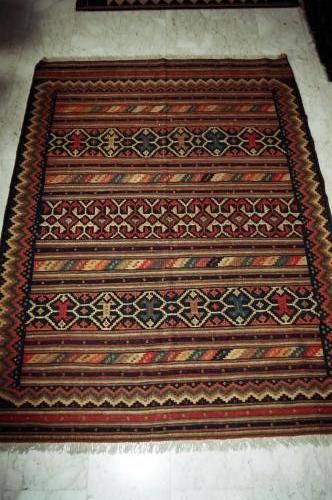
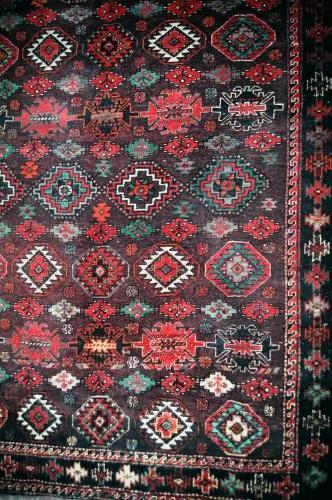
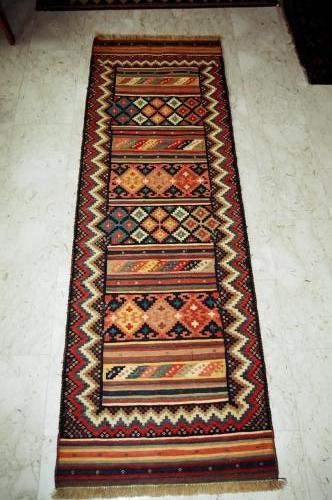
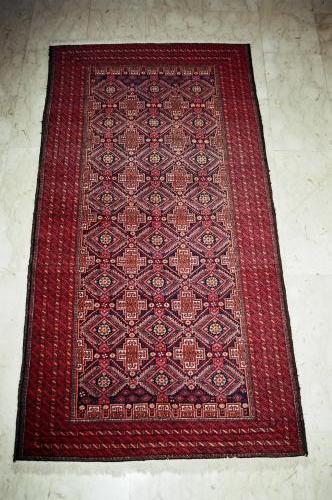
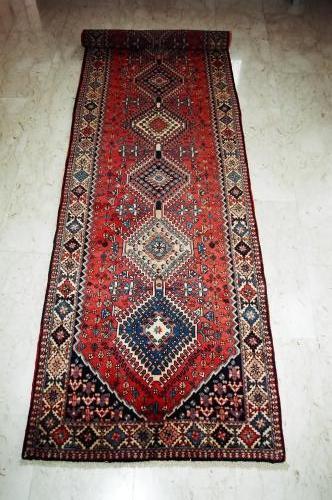
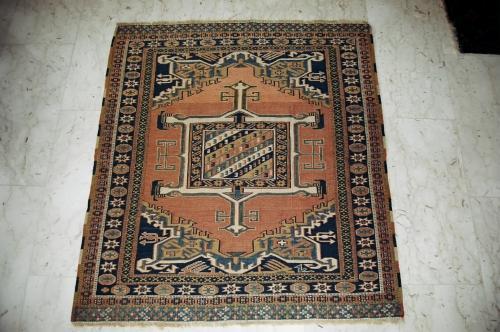
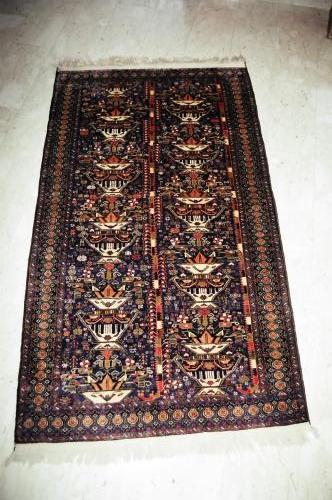
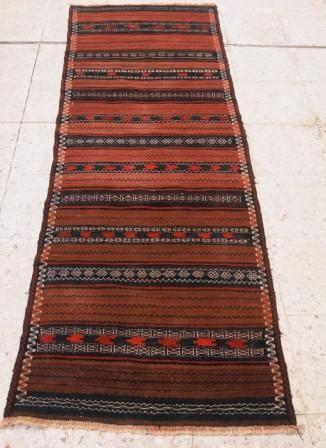
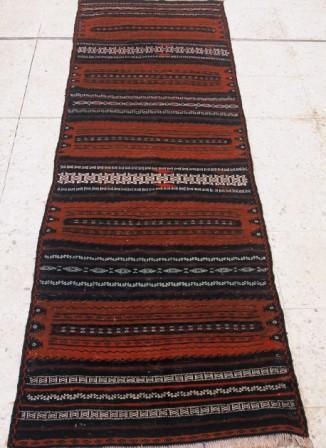
The shipment has cleared and our lounge is now taken over by piles of carpets & kilims. These include old Qashqai and Luri carpets, Qashqai gabbeh carpets, Yalameh carpets including runner sizes, Turkoman carpets, unique Balouch carpets, new Luri carpets, kilims from Senneh, Ardebil and Sirjan, 100% silk or wool & silk carpets from Sarakhs and Quchan, including some large 6m2 pieces, and some nomadic items such as horse blankets, saddlebags, tent decorations, camel covers and camel or horse head/neck decorations. Some pictures are here, and I'll upload more next week when I get some time.
Drop us an email to arrange a time to view at tribalcarpets@gmail.com.

Tuesday, January 17, 2006

Some silk carpets

Back from another buying trip to Iran, and a shipment of some 180 odd items is expected in the next few weeks. In the meantime I have available some tribal design silk carpets that I managed to carry back with me. See them here.

UPDATE: 13 Feb - shipment still hasn't left Iran, but is expected on this Saturday's flight from Isfahan...

Tuesday, December 20, 2005

Photos updated on Flickr

I've just added a few more photos of carpets & kilims that are currently available for sale. You can click on this or the Flickr link top right to see them.

I'm making another buying trip early January, so watch this space.

Wednesday, October 05, 2005

New shipment of carpets & kilims (part II)

Well, most of that July shipment actually ended up being stuck in Kuwait customs for 2 1/2 months! (No thanks in part to some so-called carpet dealers who used carpet shipments from Pakistan to import heroin!). But thankfully my shipment finally cleared. Here's a taste of some of them.


Friday, July 15, 2005

New shipment of carpets & kilims

We've just got in a new shipment of carpets & kilims from Iran. There's kurdish kilims from Senneh & Quchan, old Bakhtiari and Lors saddlebags, antique and new Afshar sofreh flatweaves, old Lors and Qashqai carpets, Yalameh & Balouch carpet runners, some extremly finely woven Balouch kilims, old & new Turkman & Balouch carpets, fine quality Qashqai gabbeh carpets, and many more items. Send me an email at tribalcarpets@gmail.com and I'll provide details on where to find us.

Friday, July 01, 2005

Persian Tribal Carpets on Flickr

Enough of trying to use 'blogger' or 'Hello' to post photos and text in the same post... Flickr is much easier. So from now on, please go to www.flickr.com/photos/tribalcarpets to view the current carpets and kilims for sale.

Monday, June 27, 2005

Balouch eating mats

Here are 2 fine-quality kilims made by Balouch tribespeople as eating mats. Both KD 60

Saturday, May 28, 2005

Baktiari saddle bag


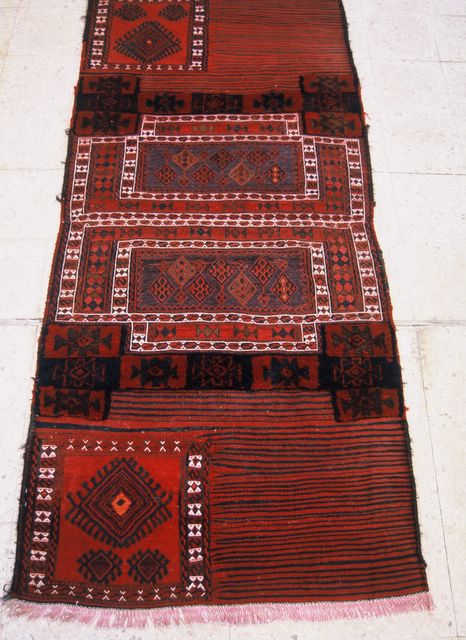
This is a large Baktiari saddle bag that was used for many years by nomads on their yearly migrations. It has been opened out stitched in the middle to give a symetrical kilim/carpet/embroidery work to lay on the floor or hang on the wall.


Item no. 38
Origin: Bakhtiari
Price: KD 120
Size: 244 x 112cm
Material: 100% wool

Thursday, May 26, 2005

Persian Tribal Carpets available in Kuwait

Welcome to Persian Tribal Carpets. As you’ll see we’ve skimped on designing a flash looking website to go the “free” route and keep our costs down… and pass on those cost savings to you, the buyer.

Please look through the inventory of carpets on our Flickr photo website and if something appeals, drop us an email with the reference number. If you don’t see anything that is quite what you’re looking for – e.g. you’re looking for a certain pattern, style, carpet from a particular region, or the colours aren’t quite right - let us know. We have a number of sources in Iran where we can obtain, hopefully, the right carpet or kilim to fit in with your décor. If you’ve got the time, we can probably even get a new carpet made to order.

We will endeavor to keep the items for sale up to date on the Flickr site, but stock can move pretty quickly at times, so please forgive us if the item you are interested in has gone before we get to update the page. Sold items will be indicated, but you can look at these for ideas of the sorts of rugs and kilims that were previously available (and if you find something you particularly like we can try to order in something similar).

We offer a range of carpets and kilims at various sizes and price points, ranging from authentic nomadic weavings, i.e. woven by nomadic women, to weavings based on nomadic or tribal designs made in the villages and towns of Iran, invariably from tribes that have given up their nomadic existence but continue to keep the traditions of carpet weaving alive.

And in a unique move for this part of the world, all prices are fixed at good value prices. So, no more haggling over prices with a shrewd salesman in the bazaar, who will spin you any old yarn to make a sale. Or maybe you don’t really know the value of the item you are negotiating for anyway, and you find out later you’ve been ripped off.

Please send us an email at tribalcarpets@gmail.com if you are interested in purchasing any of the carpets or kilims, or to get instructions on where to find us. Alternatively you can leave comments against particular carpets and kilims for other users to view.