


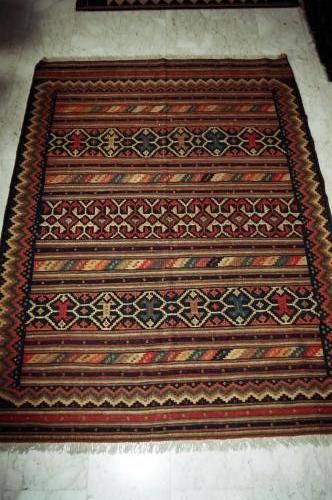
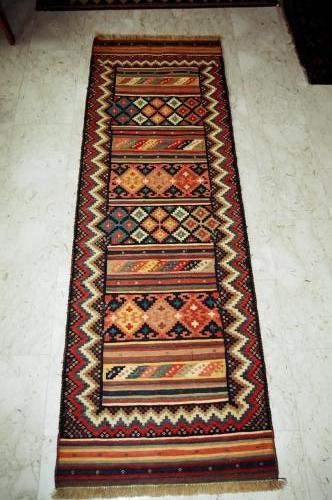
http://picasaweb.google.co.uk/tribalcarpets/SofrehKhorjinAndTascheSept2008# - To give you a rough idea on prices the sofreh (square kilims) are between US$400-500. The large and very unique khorjin (open saddlebags) with kilim, embroidery & carpet techniques are between $1000 – 1100. The small khorjin (bags) are between $130-350. The tasche (open bags) are between $400-560.
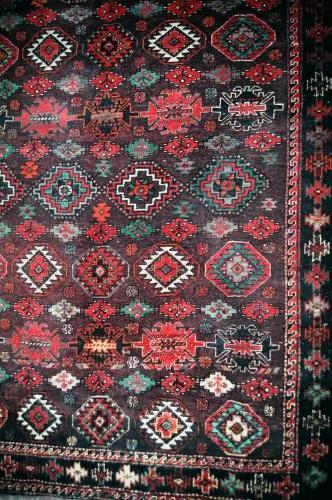
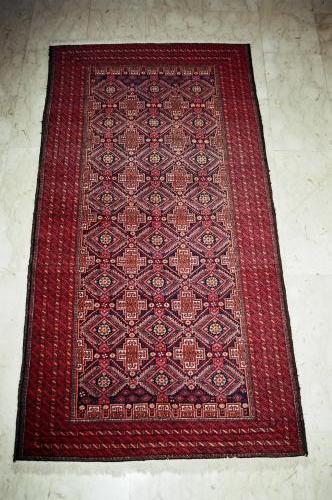
http://picasaweb.google.co.uk/tribalcarpets/ZollanvariBalootchSoumak# - these are from Zollanvari, the best quality producer in Iran. These will sell for roughly $580-640 per sqm.
If you are interested in any item, please let me know photo number and I can give exact price and dimensions, etc.
Tests for Silk
OK, you're looking at a nicely woven, nicely patterned, closely clipped
"silk" rug with what appears to be real silk fringe. You still might be
looking at a rug made of artificial silk. Here are three field tests that
might help you distinguish real from fake. No guarantee; your mileage may
vary.
Rub it! It is sometimes claimed that you can tell real silk from artificial
silk by vigorously rubbing the pile with your open palm. The real silk rug
feels warm, the artificial silk rug stays cool to the touch. We sometimes
think we have felt this difference. Of course, it helps to have a real silk
rug with you so that you can compare a known quantity!
Burn it! This test is at least good theatre, and actually can be helpful.
Clip off a small piece of the fringe, or pull a knot out of the rug from
the back (why should the owner object?). Burn it. Look at the ash and smell
the smoke. If the material was cellulose (rayon), the ash should be soft
and chalky, and the smell should be like burning paper (most paper is made
of cellulose). If the sample is real silk, the burning sample should ball
to a black, crispy ash, and the smell should be of burning hair (you're
burning protein, the same stuff your hair is made of). You've got to be a
little careful with this test to avoid smelling the smoke from the match
(and to avoid igniting yourself or the rug dealer's shop).
Dissolve it! The most accurate test is one that chemically differentiates
protein from cellulose or petrochemicals. One such test: at room
temperature, mix a solution of 16 g copper sulfate (CuSO4) in 150 cc of
water. Add 8-10 g glycerine, then caustic soda (sodium hydroxide: NaOH)
until a clear solution is obtained. This solution will dissolve a small
sample of natural silk, but will leave cotton, rayon, and nylon unchanged.
also:
SILK BURNS ONLY AS FAR AS ON FIRE SOURCE, WHILE NYLON ONCE FIRED WILL BURN
UP TO END.... AND MORE IMPORTANT WHEN SILK BURNS, IT SMELLS LIKE A BURNED
INSECT.
Take a container of bleach put a little into the cap....take a fiber and
place it in the bleach....if it disappears within about 20 seconds its
probably silk. If it is still there after 5 min...you know its not
silk...the color of course will change, but the fiber will still be there.
It is not 100% conclusive but its fast and inexpensive
From the ASCR Fiber & Fabric Forensics class textbooks:
- A 5% concentration of sodium hypochlorite @ 20 degrees C, will dissolve
silk in 20 minutes.
- A 60% concentration of sulfuric acid @ 20 degrees C, will dissolve silk
in 20 minutes.
- Silk will also dissolve in solutions of zinc chloride, calcium chloride,
alkali thiocyanates, and ammoniacal solutions of copper or nickel.
J. Burke, C.R.N.
( Certifiable Rugnut )
www.rugmates.com

We're moving to Bahrain during the summer, which means for the first time we're having a sale. We'll be setting up again in Bahrain, but to reduce the amount of stock we'll be shipping to Bahrain, now's your chance to get a good deal!
 Here's the staff showing off some of the new items in stock. I've also uploaded 24 items on the flickr website.
 he it
he it em
em number
 and we can give you the price and whether we have it i
 n
n  s
s tock.
tock.



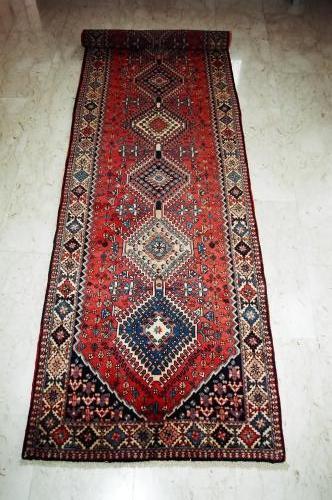
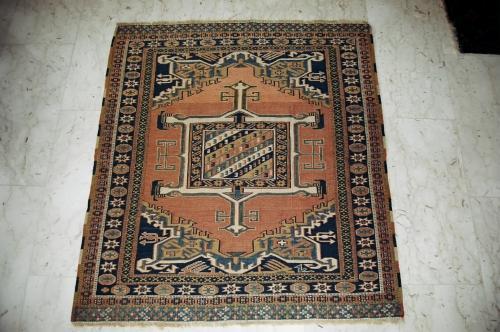
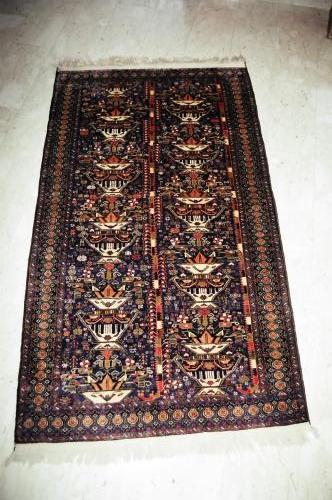
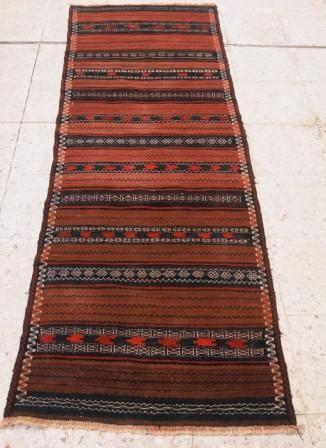
Another shipment of tribal carpets has arrived from
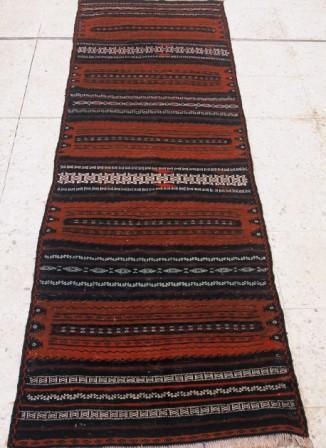
This shipment features some old Qashqai / Shirazi and Luri carpets in various sizes, Yalameh carpets and Balouch prayer rugs, new wool & silk carpets from Sarakhs and Quchan, Kurdish kapan kilims (the Kurds of Khorassan region’s horse blankets), and various small kilim bags.
** UPDATE: Some photos are on my Flickr website, www.flickr.com/photos/tribalcarpets, which appears now to be unblocked if you are using Fastelco.
If you are interested in viewing in person please drop me an email tribalcarpets@gmail.com.
I’m also off to
I’ll also be popping down to
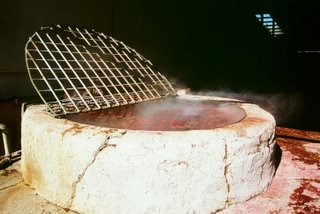
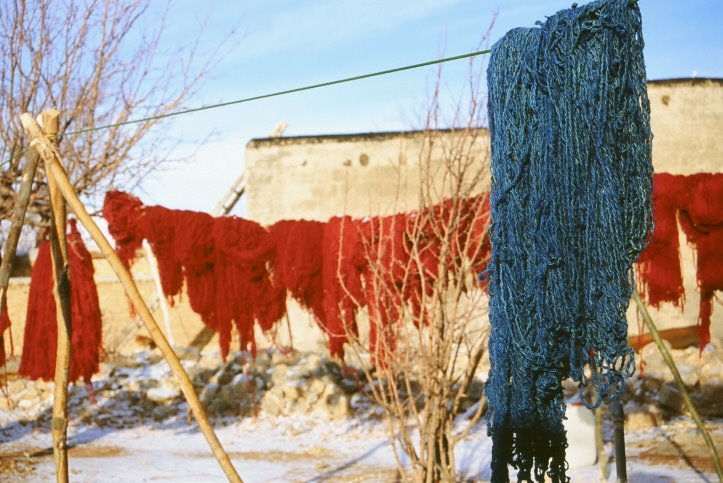
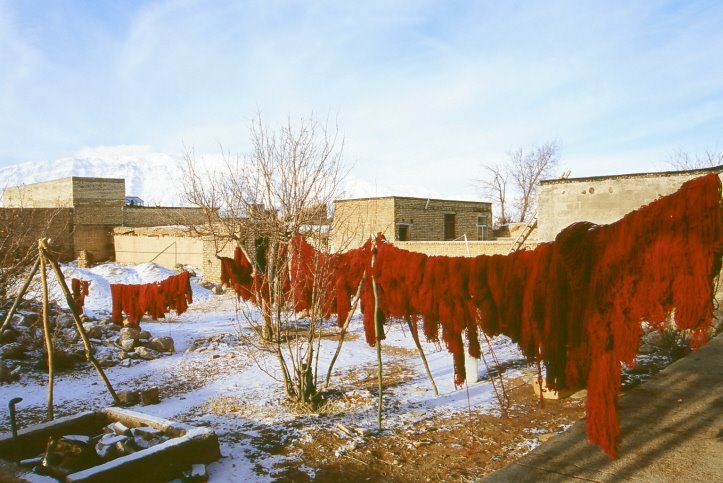
A dye vat - wool being dyed red with madder root
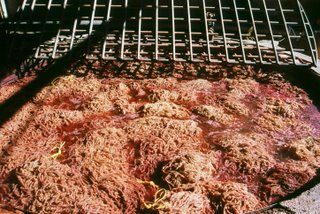
Wool in the dye vat
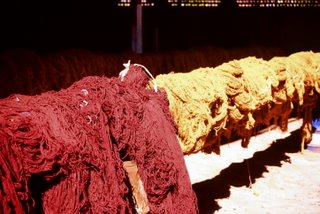
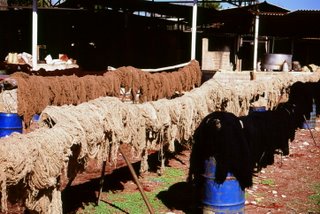
Dyed wool drying in the sun
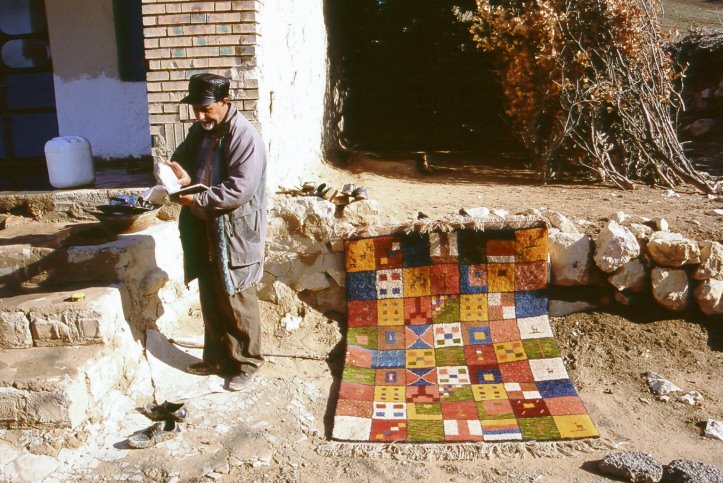
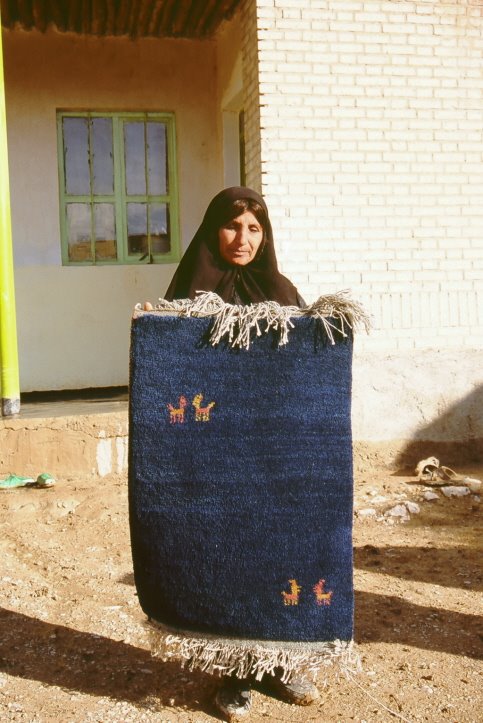
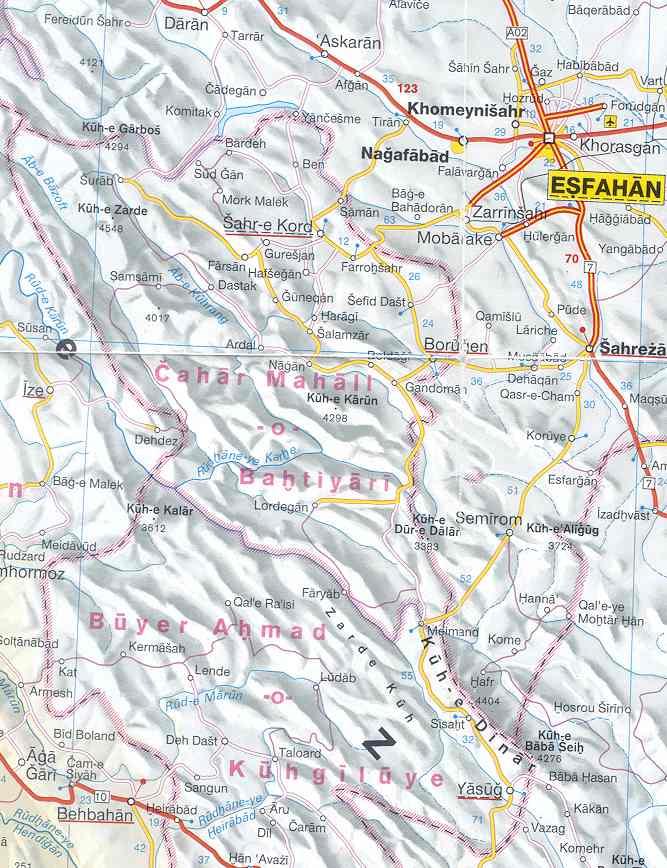 On my last buying trip to Iran I stayed with a Qashqai producer in Borujen, Godarz Hoshmand Emanlou, and went with him to visit some of the 100-odd weavers he has producing gabbeh carpets in the mountain villages in this area. He dyes all the wool himself, using vegetable dyes, which he then provides to the weavers. He also provides them with the designs to weave based on his knowledge of what the market wants. The weavers are paid for the product off the loom. Each week Godarz makes a trip to a dealer in the Tehran bazaar who buys the product and will finish the carpets for sale, i.e. shear the pile and wash the carpet. The weavers are all from Bakhtiari villages, though the gabbehs when they reach the markets in Esfahan, Shiraz or Tehran will probably be known as Qashqai gabbeh weavings.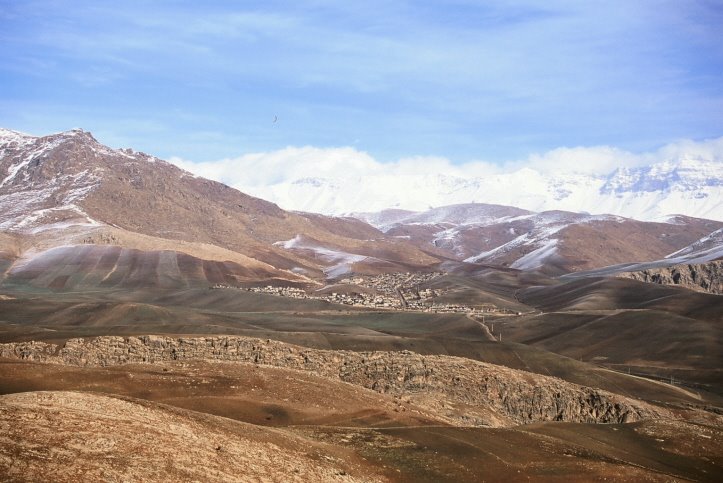
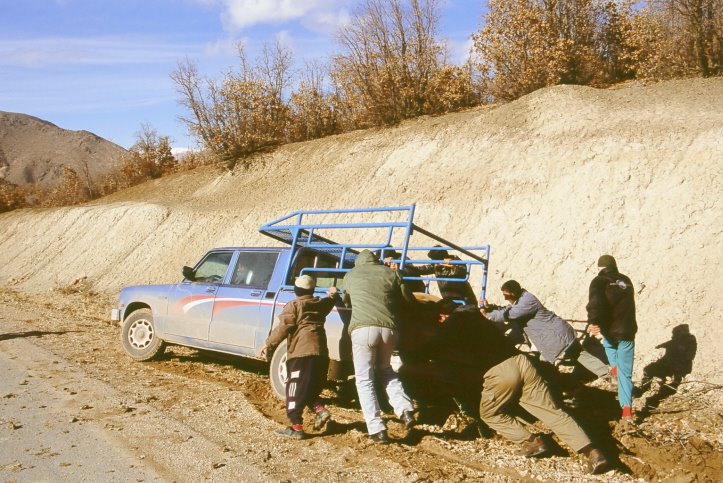 This is a very mountainous region, and visiting in January there was a lot of snow around. The villages are mostly unpaved, which meant wading through lots of mud. We even managed to get our vehicle stuck in the mud when we veered off the tar-sealed road.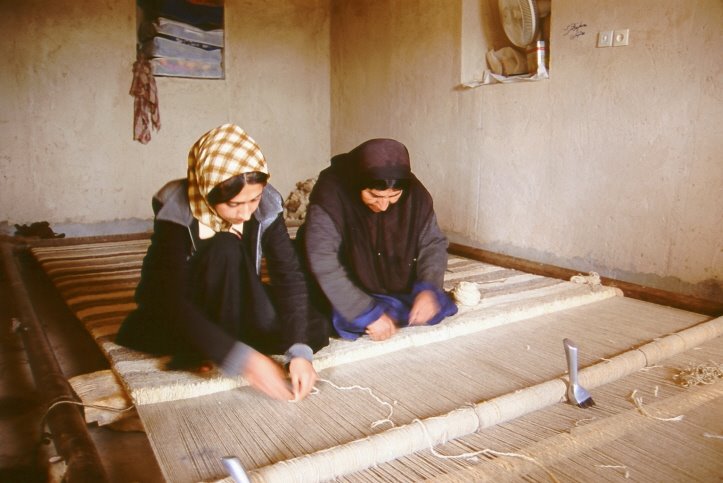
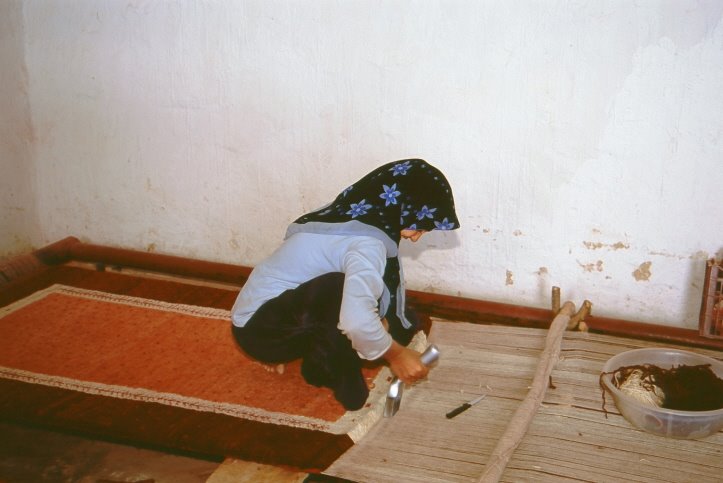 A 16 year old girl doing some of the weaving on a fine quality gabbeh carpet that is mostly the work of her older 24 year old sister.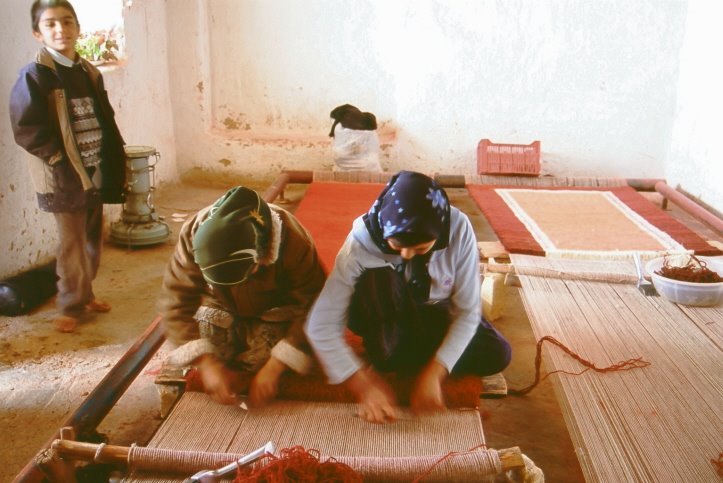

Me: I don't suppose you can expand on your comment...
"As I'm sure you are well aware, there is a VERY right and VERY wrong way
to treat vegetable dyed fine wool rugs! An incorrect approach could be disastrous!"Here in the Middle East we vacuum carpets, then wash them every few years when they require it, by lightly scrubbing with a wet brush and some soap solution that doesn't have any nasty chemicals in it (some use olive oil soap, some baby shampoo), then rinse with cold water and leave out in the sun to dry. This is what they do in Iran, or some I'm told by all the dealers I buy from.
The cleaning expert: The cleaning methods that you have alluded to (using water and mild soap) are just fine. As long as the color-fastness of the dyes are tested prior to actually washing the rug. The main problem with so many "so called experts" that claim to be able to clean fine rugs is that so many cleaners attempt to use the same types of chemicals and detergents (alkaline chemicals) that they used when cleaning synthetic fibers (such as nylon). This can cause severe damage to wool fibers. Alkaline chemicals should NEVER be used on wool. Nor should any types of stain guards (Tefflon, StainMaster, etc.) ever be used. Wool fibers are permeated with lanolin which is a natural stain guard. No other types of stain guards are necessary.
It is also important that wool rugs not be "overcleaned" as the cleaning process will actually tend to strip away the natural lanolin. This can leave the fibers dried out and brittle.
Finally, it is very important that a wool rug be dried properly. There is certainly no harm in getting a wool rug wet (providing that the dyes are stable and will not bleed). After all, sheep stand out in the rain! But the rug should be dried as much as possible and as quickly as possible. For this it is important that extraction equipment is used along with blowers and dehumidification equipment.
It is not hard to clean wool rugs. But far too often there are carpet cleaning companies that are trying to expand their business and attempt to clean fine wool (and silk) rugs, not realizing that their cleaning methods are actually damaging these rugs! I know this because we VERY OFTEN receive rugs to repair that have been damaged by these self-proclaimed "experts".Sincerely,
Chris Howell
Color Your Carpet
http://www.colorcarpet.com/
(301) 776-2393





 Posts
Posts

